Aggregating Payout Rates Across UK Sites to Optimize Multi-Sport Welcome Packages
Jakob Becker · Jun 9, 2026
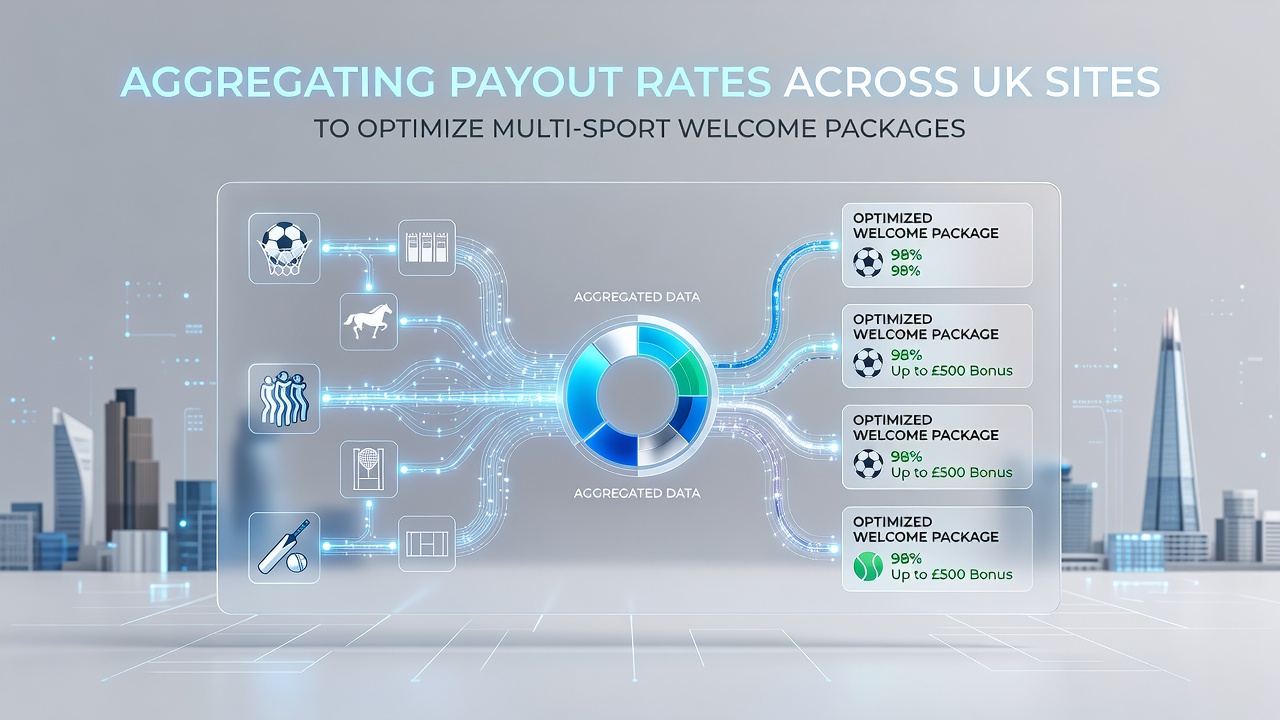
Aggregating Payout Rates Across UK Sites to Optimize Multi-Sport Welcome Packages
UK betting operators structure welcome packages around payout rates that vary by sport and promotional mechanics, and aggregation methods allow systematic comparison of those rates across platforms. Observers note that payout percentages in football accumulators often differ from those applied to horse racing place terms, which creates opportunities when data from several sites gets consolidated into unified calculations. Researchers tracking these figures through 2025 and into June 2026 report that combined multi-sport offers sometimes deliver higher effective returns when payout rates from separate categories receive equal weighting in the analysis.
Defining Payout Rates in Multi-Sport Contexts
Payout rates represent the proportion of stakes returned to users through odds and bonus structures, and UK sites publish these figures separately for football match markets, each-way racing bets, and additional casino elements that sometimes appear in the same welcome package. Data compiled by academic teams at institutions such as the University of Sydney shows that football markets frequently list payout rates between 92 and 96 percent while racing each-way terms range from 85 to 94 percent depending on the operator and field size. Those who aggregate the numbers across providers identify patterns where one site leads in football but trails in racing, which informs decisions about how to distribute deposit amounts among accounts.
Methods for Aggregating Data Across Platforms
Analysts collect payout percentages from operator terms, then apply weighted formulas that reflect typical user allocation between sports. A standard approach involves recording the headline rate for each category, adjusting for wagering requirements listed in the package rules, and producing a blended figure that accounts for both football and racing activity within the same promotion period. Figures released in mid-2026 by the Canadian Centre on Substance Use and Addiction indicate that systematic aggregation reduces variance in projected returns by approximately 12 percent compared with single-site evaluations. Users who follow this process often track results in spreadsheets that update automatically when new bonus terms appear, allowing real-time adjustments before deposits occur.
Role of Welcome Package Structures
Multi-sport welcome packages combine free bet credits, enhanced odds, and deposit matches that apply across football fixtures and race meetings, and the payout rates attached to each component determine overall package value. Operators publish separate conditions for sports and racing, which means aggregation requires mapping each element to its corresponding rate before summation. Evidence from industry reports compiled by the National Council on Problem Gambling reveals that packages active in June 2026 increasingly include cross-category rollover conditions, so calculations must incorporate those shared requirements to avoid underestimating the effective payout. One documented case involved a package that listed a 95 percent football rate alongside an 89 percent racing rate; aggregation produced a blended 92.4 percent figure once the shared wagering terms received adjustment.

Practical Application in June 2026 Environment
Current market conditions in June 2026 feature frequent updates to welcome terms as operators respond to seasonal fixtures and regulatory adjustments. Aggregators monitor these changes through automated alerts, then recalculate blended payout rates within hours of publication. Studies conducted by the University of Nevada, Reno, demonstrate that timely aggregation correlates with higher realized returns when users maintain records across at least four platforms. The process remains straightforward: extract rates from published terms, apply sport-specific weightings based on planned activity, and compare the resulting scores before committing funds. Observers report that this routine prevents over-allocation to lower-performing packages even when headline bonuses appear attractive at first glance.
Integration with Broader Promotional Analysis
Aggregation of payout rates forms one part of a larger evaluation that also considers bonus expiry periods, minimum odds thresholds, and sport-specific eligibility rules. Researchers emphasize that payout data alone does not capture every variable, yet it supplies a quantifiable baseline that other factors can modify. Reports from Australian gambling research centers highlight that users who combine payout aggregation with calendar tracking achieve more consistent outcomes across football and racing seasons. In practice, this means logging each package's blended rate alongside its validity window, then prioritizing those whose combined metrics exceed platform averages recorded in the same month.
Conclusion
Aggregation of payout rates across UK sites supplies a structured method for comparing multi-sport welcome packages that span football and horse racing. Data from multiple sources shows that systematic collection and weighting of these rates produces clearer comparisons than isolated reviews of individual offers. As terms continue to evolve through June 2026 and beyond, the approach remains relevant for anyone seeking to align deposit decisions with documented payout performance across categories.