Charting Demographic Shifts in Tiered Incentive Access Across UK Athletic, Equine, and Virtual Gaming Markets
Bianca Keller · Jun 23, 2026
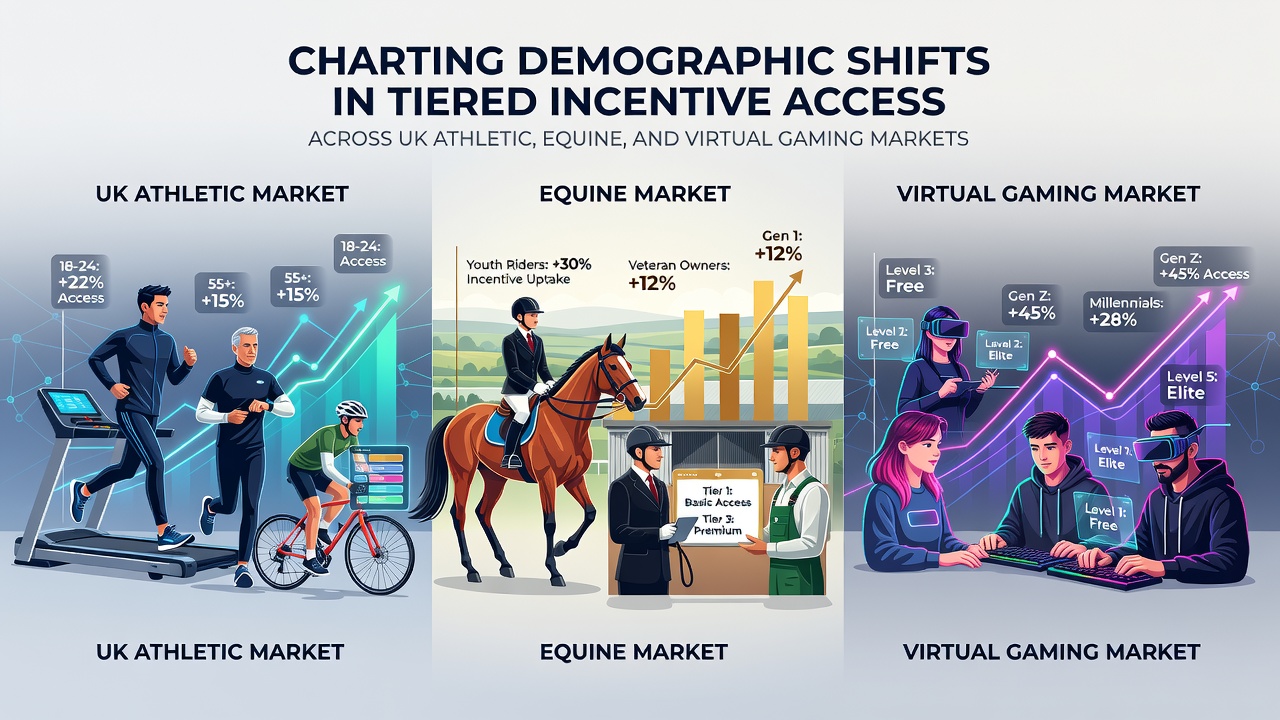
Charting Demographic Shifts in Tiered Incentive Access Across UK Athletic, Equine, and Virtual Gaming Markets
Market analysts have tracked notable changes in how various demographic groups gain entry to tiered incentive programs within UK athletic competitions, equine events, and virtual gaming platforms since the mid-2020s, and data compiled through 2026 reveals patterns tied to age brackets, income levels, and regional distributions that influence access to progressive reward structures.
Patterns in Athletic Market Participation
Football betting markets continue to draw younger participants into entry-level incentive tiers, yet observers note a gradual increase in middle-aged groups securing mid-tier benefits through consistent engagement metrics, while higher income cohorts dominate top-tier access points that offer enhanced multipliers on accumulated activity. Researchers from academic institutions have documented these trends using anonymized transaction datasets that highlight how urban males aged 25 to 34 represent the largest segment in initial loyalty bands, whereas participants over 45 show slower progression rates despite higher average spend per session.
Studies indicate that regional variations play a role as well, with northern English postcodes exhibiting stronger representation in athletic incentive ladders compared to southern areas, and this distribution aligns with broader employment and leisure patterns tracked by national statistical agencies. Those who monitor these shifts point out that virtual overlays on live matches have accelerated tier climbs for tech-savvy demographics, allowing quicker accumulation of qualifying points without physical attendance at venues.
Equine Sector Developments and Access Dynamics
Horse racing incentive programs display distinct demographic contours where older participants maintain stronger footholds in premium tiers, and data from industry reports show that individuals aged 50 and above account for disproportionate shares of sustained high-level rewards due to longer participation histories. Equine markets also register higher female involvement at intermediate tiers than athletic counterparts, with figures revealing steady growth in this segment between 2024 and 2026.
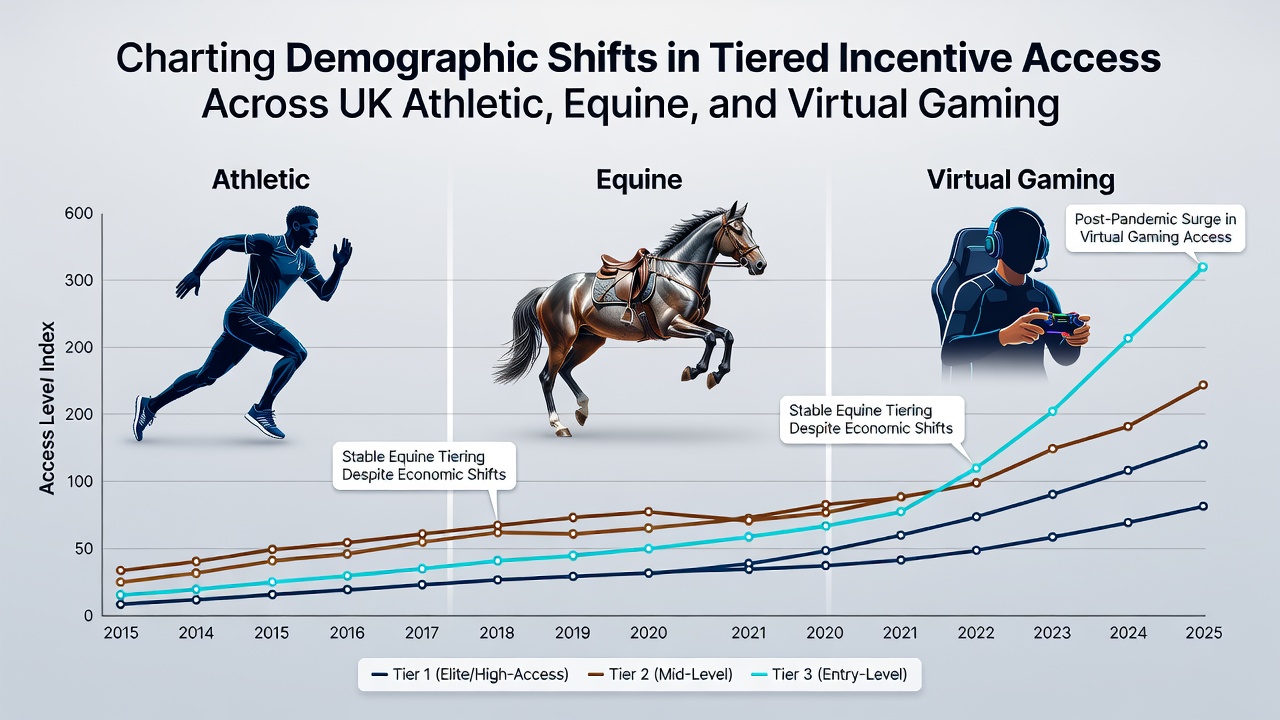
Income stratification appears pronounced here, as lower to middle earning brackets cluster in foundational tiers while affluent groups leverage seasonal packages that unlock exclusive access features. Observers have noted that all-weather track schedules and festival events create periodic spikes in tier movement, particularly among rural demographics who combine racing attendance with digital engagement tools. Australian Bureau of Statistics publications on international leisure trends provide comparative context, showing similar age-related access gradients in comparable markets abroad.
Virtual Gaming Market Shifts
Virtual gaming environments present the most fluid demographic mobility, and evidence suggests that under-30 cohorts advance through incentive tiers at accelerated rates because of integrated mobile platforms that reward frequent micro-interactions. Gender parity has improved markedly in this sector compared to traditional athletic and equine offerings, with recent datasets indicating near-equal distribution at entry and mid levels by June 2026.
Income effects manifest differently as well, since virtual formats lower barriers for broader participation and allow tier progression through time investment rather than solely financial outlay. Industry associations across Europe have compiled cross-market analyses that underscore how virtual segments absorb shifting preferences from physical sports, resulting in hybrid user profiles that blend athletic interest with digital simulation preferences. These patterns emerge clearly when comparing longitudinal user logs across platforms that span all three categories.
Comparative Insights Across Sectors
When athletic, equine, and virtual markets are examined side by side, clear divergences surface in how demographic variables correlate with tier attainment speed and retention. Athletic incentives favor younger urban profiles for rapid early advancement, equine programs sustain older and regionally dispersed groups at higher levels, and virtual channels facilitate broader entry for diverse income and gender cohorts. Pew Research Center analyses of digital leisure behaviors offer supporting perspective on how online environments reshape traditional participation hierarchies in entertainment sectors globally.
June 2026 updates from aggregated platform reports confirm that hybrid participation, where users engage multiple categories simultaneously, correlates with elevated tier stability across demographics, particularly among those balancing work schedules with flexible digital options. Such crossovers reduce the impact of single-sector barriers and create more resilient access pathways over time.
Conclusion
Overall demographic mapping in these UK markets underscores ongoing evolution driven by technological integration and changing leisure habits, and continued monitoring through established research channels will clarify whether current trajectories stabilize or accelerate further into the latter half of the decade.